I've nearly finished all three scenes now. I managed to fix the star seams issue rather easily. It turns out there was just a simple checkbox when converting the 3D scene to a 2D output in which you can state if you are using any 3D assets or elements so that the output can account for them. https://www.youtube.com/watch?v=Ob9lgyeMjas
Making the scenes transition into each other has been interesting. I have tried to make this very gradual and slow as to keep with the mood of dreams and calming visuals. I rendered a low res version to show Grace and she really likes it. I was concerned about the simplicity of the visuals but when I asked her she said it worked better simple. https://www.youtube.com/watch?v=SsC0yYUgRgI
Rendering has been a long process with many errors. The composition is nearly a 6k file with many 3D layers, which has been causing many crashes and slow performance.
Now I'm just doing final checks and fixes, and maybe some changes when I send a final render to Grace. The installation itself will be on the 16th of February in Hartlepool. I will be looking over the VR part, making sure it keeps working as well as taking photo and video of the event for Grace and myself to evidence.
As I've been continuing to work on the VR project, I have kept running into more and more issues. I tried one more test using a flat composition which made me realise that it was not going to be possible to achieve what I was thinking of doing using that method. https://www.youtube.com/watch?v=dEQG2N_Swz8
After some further research, I discovered the VR environment features within After Effects. This consists of a three dimensional composition which is then rendered from 6 angles and merged into a map that can be read and wrapped by YouTube for seamless 360 video. While this makes better results, it is still very fiddly to work with. I have been struggling to make the scene work as some effects aren't compatible with the VR systems in After Effects. This has caused many stitching issues like you can see below. I used particle world to create the shooting stars, however my first test didn't work well. The 6 sections of the world are visible as the 3D space of the particle generator doesn't seem compatible with VR. This will take further experimentation and problem solving in order to figure out.
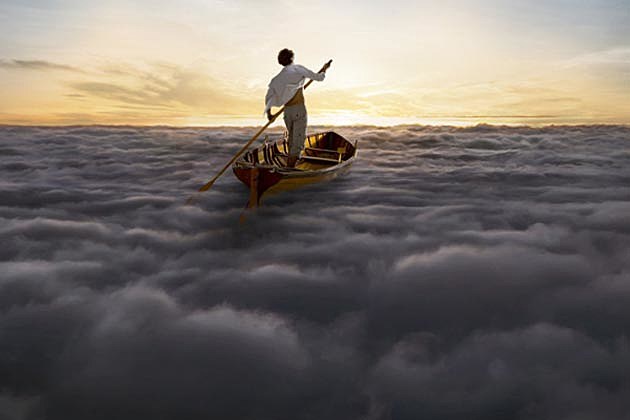
From the social meetup with students from Leeds College of Music, I have taken on a task for one of my live briefs. The student, Grace is working on an art installation about dreams. She is wanting a VR section to the event. VR is something that I've not tried before but am excited to have a go at and learn how to do it. It will not be an interactive VR experience, but rather a 360 video to create atmospheric and dreamy imagery. Here are some inspirations I suggested to Grace, which I will be going forward with.
Experimenting with the technicalities of making a 360 video, I did this test. This was done as one flat 16:9 composition with basic solids and imagery from google images, just to play with how to do the effect.
https://youtu.be/fAld1rKAbT0
Since this is just a flat video, I have had to try to manually make the edges of the screen match up with the other edge. YouTube's 360 video stretches the top and bottom of the image to a point. The main issues with this method is how I can create a seamless transition off one side over onto the other. I will continue to experiment with methods of creating this type of video to see what works best.